


An unscheduled shutdown in the preparation plant can affect much more than the machine that stopped. When the flow of flakes or press cake to a solvent extractor falls suddenly, the balance between solids, solvent and energy changes across the process.
Reducing that risk starts with suitable equipment, consistent preventive maintenance and a recovery plan prepared before an interruption occurs. For oilseed processors, reliable flaking is one part of keeping that larger system running steadily.
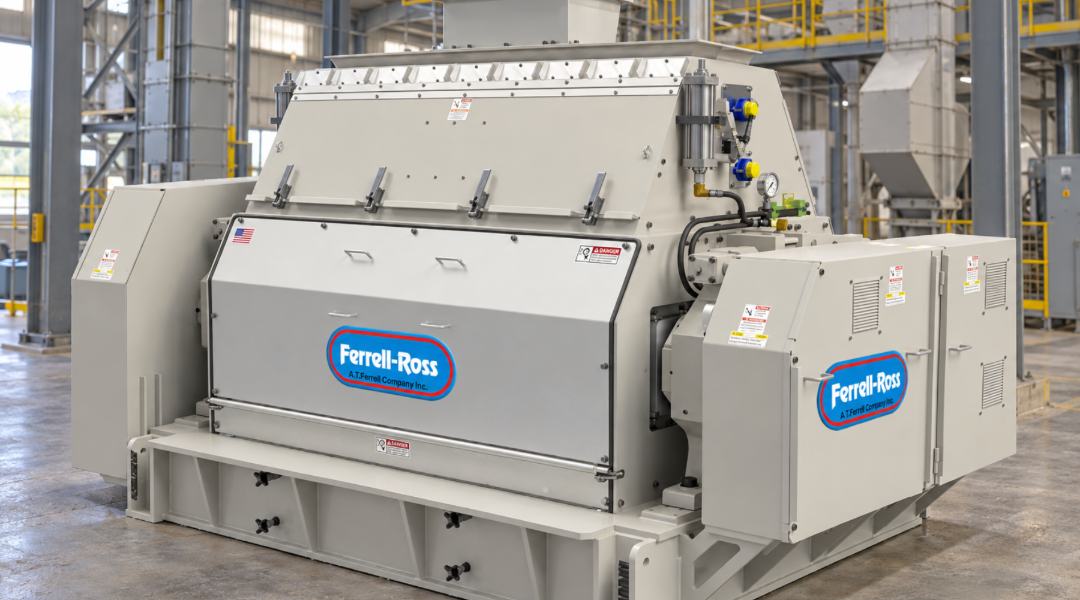
Featured image: AI-generated illustration of the Ferrell-Ross 32×84 Oilseed Flaking Mill in a conceptual preparation plant; not a photograph of a customer installation.
Why can a preparation-plant shutdown affect extraction?
The extractor, desolventizer-toaster (DT) and solvent-recovery system operate as connected stages. The DT removes residual solvent from extracted meal, while downstream recovery equipment returns solvent to the process. For background on these stages, see Oklahoma State University’s overview of oilseed processing.
A sudden change in solids flow changes the load those systems must handle. If solvent circulation, steam input and vapor handling do not respond appropriately, the disturbance can contribute to pressure excursions and increased solvent losses. That is why an upstream equipment stoppage deserves attention beyond the maintenance department.
Start with equipment suited to the application
Selecting an oilseed flaking mill involves more than matching nominal capacity. Consider the material being processed, operating duty, feeding arrangement, installation requirements and access for service. Discuss these requirements with the original equipment manufacturer (OEM) before specifying a machine.
The Ferrell-Ross 32×84 Oilseed Flaking Mill combines a heavy-duty steel structure with features intended to support operation and maintenance. Its product cut sheet identifies hydraulic roll tension, a central greasing system and a housing designed to allow removal of both rolls from either the front or back.
Those details matter during planning. A serviceable machine still needs adequate space, suitable support and a practical route for maintenance work. Reviewing access before installation can help avoid making a future repair more difficult than necessary.
Turn preventive maintenance into a repeatable routine
Equipment reliability is a shared responsibility. The OEM provides equipment guidance and support; the processor puts inspection and maintenance practices into daily use.
Use the OEM’s current instructions to establish inspection intervals and maintenance tasks for the specific mill. Keep records of findings, work completed and recurring issues so that changes in condition can be reviewed before they become interruptions.
A useful maintenance review asks:
- Are inspections and lubrication tasks being completed according to OEM recommendations?
- Are wear observations and operating changes recorded and followed up?
- Can the crew reach service points and remove components as planned?
- Do operators and maintenance personnel know when to involve the OEM?
Ferrell-Ross equipment services include inspection, training, repair support and installation reviews that can help plant teams address these questions.
Prepare for interruptions before they happen
Preventive maintenance reduces avoidable problems, but a plant also needs a response plan. Review these three areas with the people responsible for operations, maintenance and process engineering.
Process response. Have qualified personnel review how the extractor, DT and solvent-recovery systems respond to a reduction or loss of solids feed. Control loops, alarms, interlocks and protective systems must be appropriate to the installation and supported by plant-approved shutdown and restart procedures. PID control alone is not a guarantee against overpressure or excessive solvent losses.
Production continuity. Evaluate whether redundancy in critical preparation equipment is appropriate for the plant. The value of backup capacity depends on the process, layout and consequences of an interruption.
Repair readiness. Identify critical spare parts with the OEM, confirm compatibility and current availability, and establish who can carry out the repair. Keep equipment identification, service contacts and maintenance documentation accessible. Review Ferrell-Ross parts resources as part of that preparation.
Common questions about oilseed mill downtime
Can a robust flaking mill eliminate unscheduled shutdowns?
No. Equipment design is one part of reliability. Application fit, installation, inspection, maintenance and operating practices also affect performance.
Which spare parts should an oilseed plant stock?
Build the list with the OEM using the installed equipment, wear history, replacement lead times and production consequences. A useful spare-parts plan is specific to the plant rather than a generic shopping list.
What should a plant review after an interruption?
Document what stopped, what happened upstream and downstream, and what delayed recovery. Use the findings to update maintenance tasks, spare-parts planning and approved response procedures.
Build a reliability plan with Ferrell-Ross
Reducing unscheduled shutdowns takes preparation on both sides of the OEM–processor relationship. Suitable equipment, practical maintenance access and a clear support plan give plant teams a stronger starting point.
Contact Ferrell-Ross to discuss your oilseed flaking application, the 32×84 mill, service needs or critical spare parts. Share your existing equipment details and operating requirements so the conversation starts with your plant’s needs.